
Our Journey
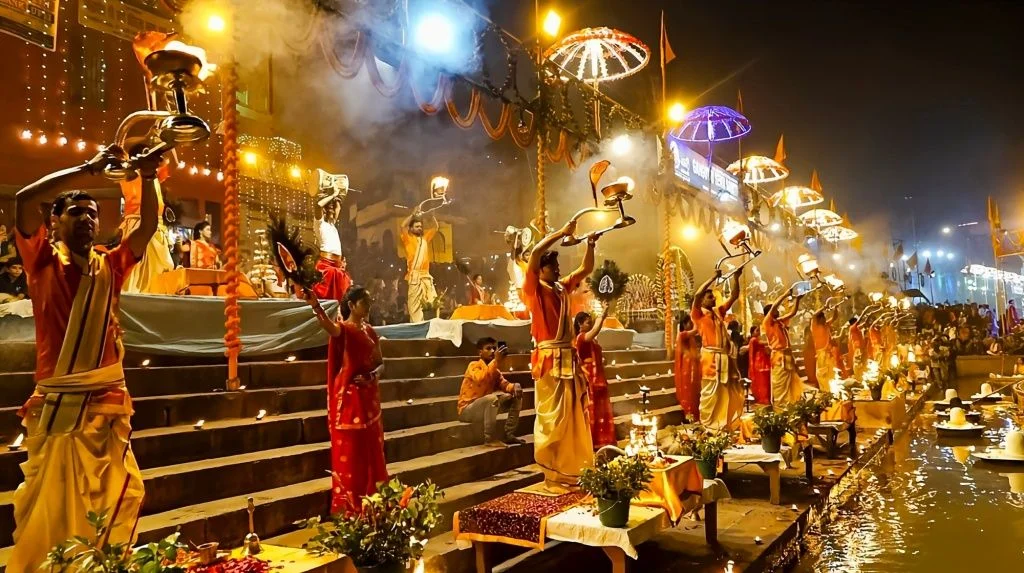
The history of Banarasi sarees traces back to the holy city of Varanasi (Banaras), one of the world’s oldest living cities.
Woven with intricate designs and fine silk, they flourished during the Mughal era, blending Persian motifs with Indian artistry.
Traditionally crafted with gold and silver zari, Banarasi sarees became symbols of royalty and elegance.
Generations of skilled weavers in Banaras have preserved this timeless art.
Today, Banarasi sarees remain a global emblem of India’s rich heritage and craftsmanship.

Virasath is enmeshed in ancient lore. The basic colours traditionally used in a Banarasi saree are a combination of Royal Blue, Rama Green and the Gold zari. The ancient designs adorning these sarees have been such as paisley motifs, peacock, bel and a string of upright leaves called Jhallar. The extravagant twisting of the pure silk threads into these forms is a talent which can only be found in Banaras and hence we decided to design our logo to honour this artform. Our logo is a Mor Pankh (Peacock feather) coloured in the traditional Banarasi colours of Royal Blue, Rama Green and Zari Gold.
About Virasath
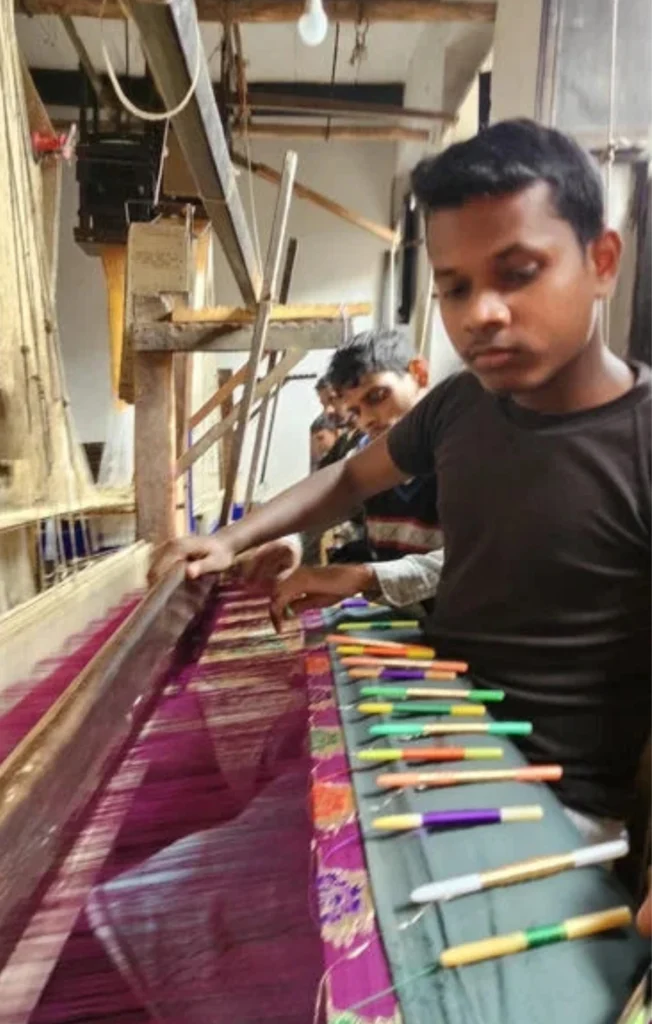
Virasath, a word originating from the hindi /Urdu dialect means inheritance of legacy, heritage or a valuable asset. We at Virasath take this literally. Bharat our country has been the creator of legacy since ages galore. Our art and artisans have contributed immensely to enrich the cultural heritage of our nation and we at Virasath believe in celebrating and preserving this legacy of master craftsmanship emanating from Banaras in the form of its silk sarees and woman wear.
Virasath endeavors to bring forth the true cultural craftsmanship, built on the ingenuity of techniques, superiority of materials and the understated refinement of the Banarasi silk to the world. The gift of Devi Ahilyabai to Banaras in the form of this sacred handloom deserves a world audience and we wish to fulfill the same.
Born in Banaras, Virasath brings the age-old weaving craftsmanship interwoven in traditions and luxury to the world through our strong connections with skilled weavers and artisans who have dedicated their lives to perfecting the art of Banarasi saree weaving. Every thread and motif in our collection reflects their generations of expertise and meticulous craftsmanship.
The entire process from sketching to the final product is overseen by us with the designs being created in-house in collaboration with our craftsmen and produced only in Banaras. We assure you that all our products are handwoven, pure and sold exclusively only through our website.
About Founder
Dr. Nimisha Shukla is a passionate advocate for preserving and promoting the rich cultural heritage of India. With a deep appreciation for the country’s art, craftsmanship, and traditions, she embarked on a journey to create a brand that would showcase the magnificence of Indian culture to the world. Driven by her passion and entrepreneurial spirit, she founded Virasath with a clear vision in mind: to bridge the gap between traditional Indian art and contemporary lifestyles. Through Virasath, she seeks to create a space where the magnificence of Indian art and heritage can be experienced, appreciated, and cherished.
She invites you to embark on a journey of discovery and immerse yourself in the rich cultural heritage of India. Through Virasath, we endeavour to share the stories, traditions, and
Join us in celebrating the LEGACY of Indian art and heritage. Explore the Virasath collection and experience the beauty, authenticity, and timeless ELEGANCE that epitomise our brand. Welcome to Virasath – where tradition meets contemporary allure, and the spirit of India comes alive.
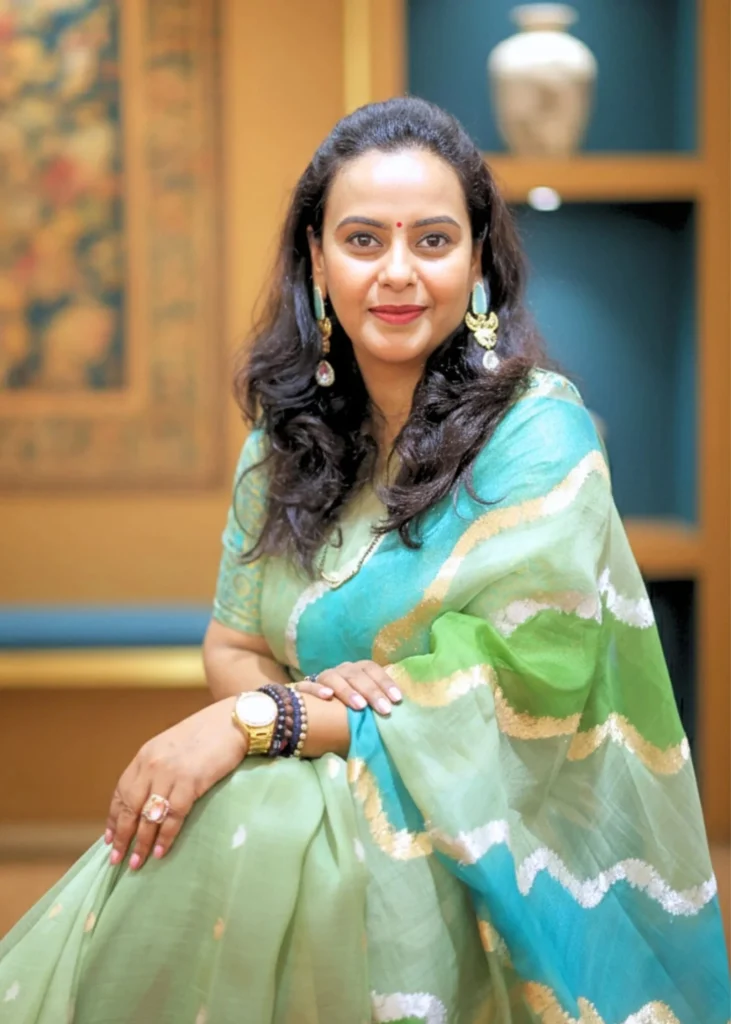
(Dr.Nimisha Shukla)
Art & Culture
Artistic Traditions
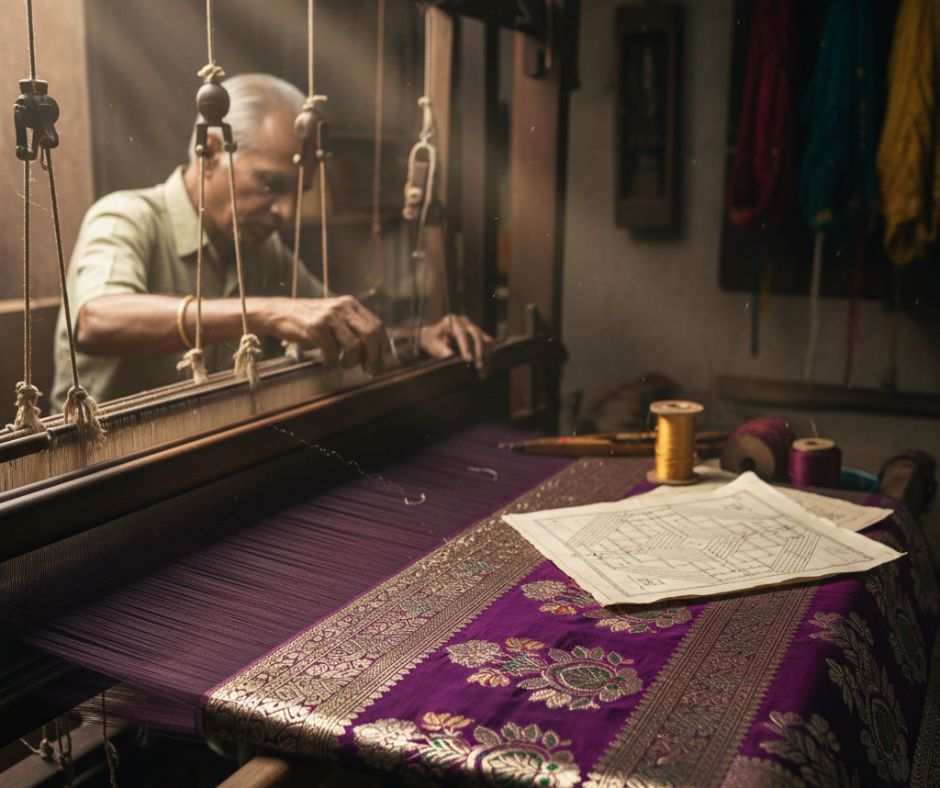
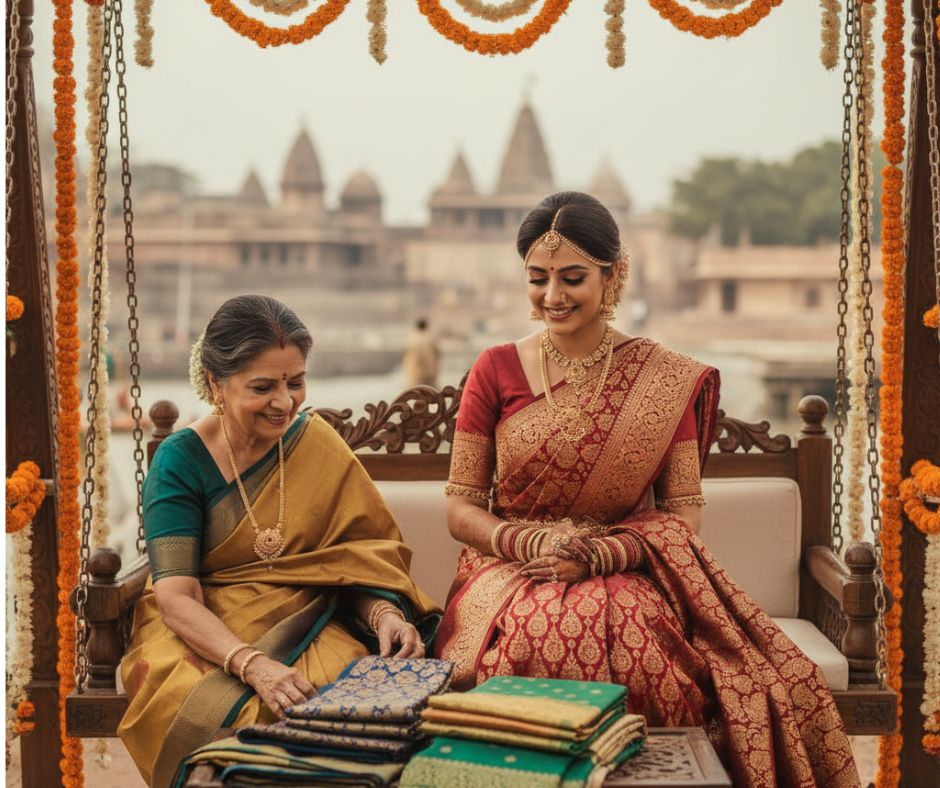
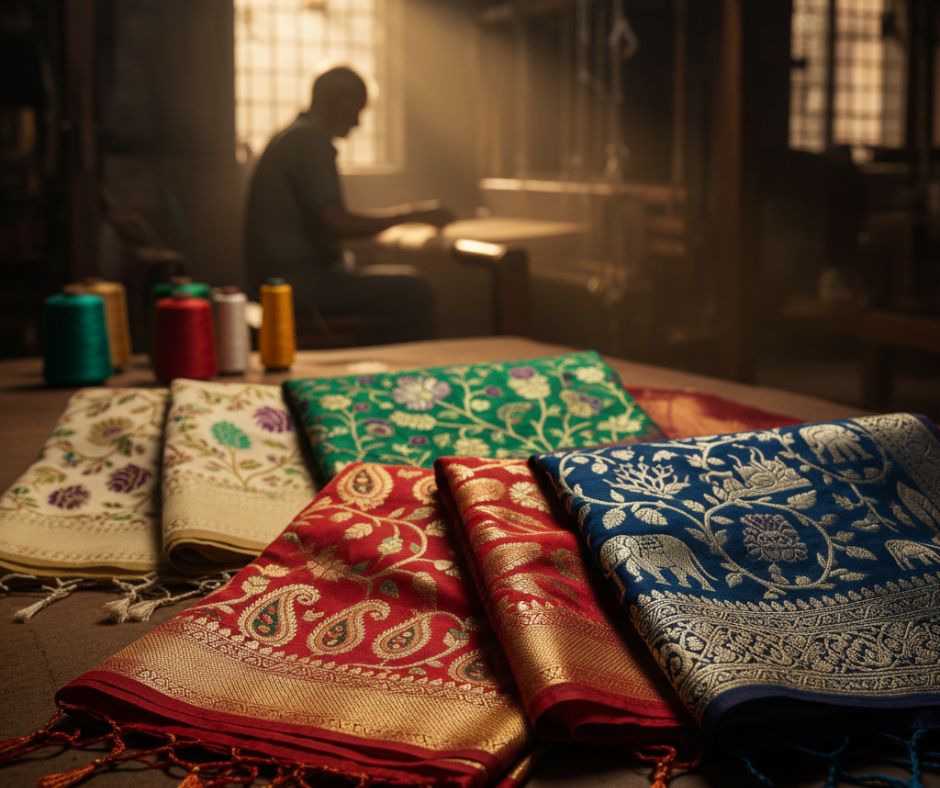
Banarasi sarees are known for their detailed craftsmanship and luxurious silk, often adorned with elaborate motifs such as flowers, paisleys, and peacocks, inspired by Mughal artistry and Indian heritage. The weaving techniques include methods like Ektara, Kadwa, Kadhiyal, Meenakari, and Tanchoi, each creating unique textures and patterns that distinguish every saree as a work of art.
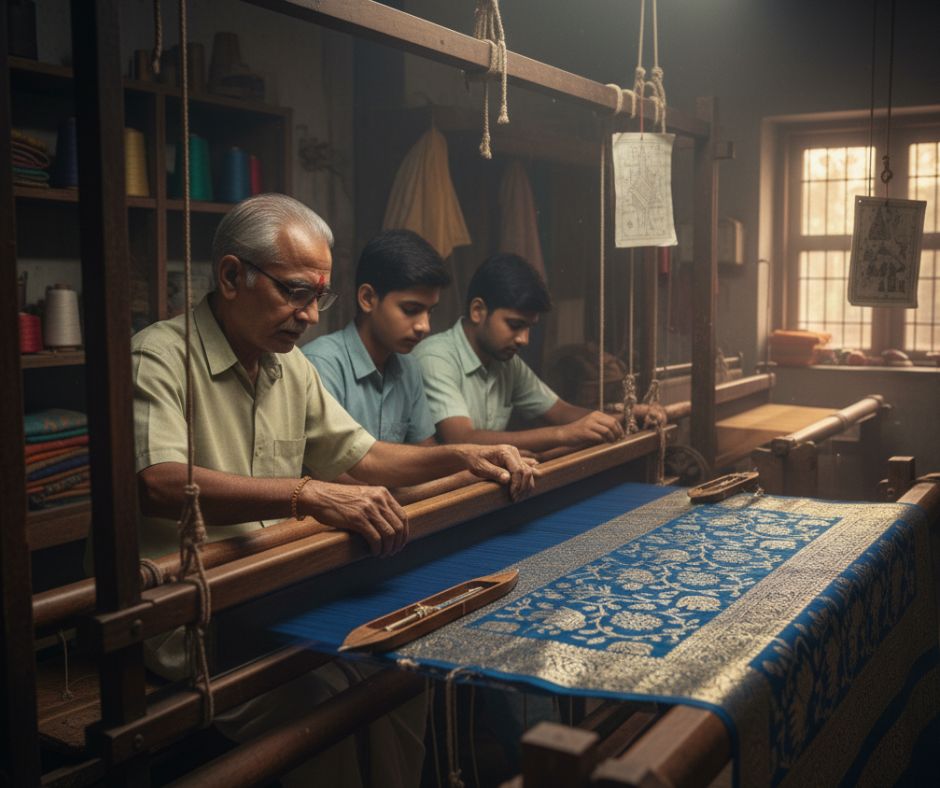
The characteristic use of gold and silver Zari thread, traditionally made from real precious metals, lends an unparalleled opulence and shimmer to the fabric. Generations of weavers, primarily from the weavers’ community in Varanasi, have protected and passed down these complex skills, often working from intricate‘naksha’ (design)paper maps. The preparation of the complex jala or Jacquard harness itself can take weeks, a testament to the dedication required before a single saree is even woven. The time taken to complete one saree can range from a few weeks to several months, depending on the complexity and the density of the zari work. This meticulous process ensures that each Banarasi saree remains a cherished heirloom, embodying the rich cultural and artistic legacy of India.
Cultural Significance
Originating from Varanasi, these sarees have been woven for over 2,000 years and are deeply woven into the cultural fabric of India. Banarasi sarees are considered symbols of marital bliss, prosperity, and family tradition, especially chosen for weddings and special occasions. They are passed down as heirlooms, preserving history and memories across generations.
The historical patronage by the Mughal court and later Indian nobility solidified their status as a luxury item, synonymous with royalty. Beyond textiles, they represent the artistry and unique spiritual essence of the holy city of Varanasi (Kashi), the place of their birth. Wearing a Banarasi saree is often viewed as honoring one’s heritage, particularly in South Indian weddings where they are a mandatory part of the bridal trousseau. Their importance in major Indian festivals like Diwali and Durga Puja further highlights their enduring role in celebrating culture and identity. The sari, therefore, is not merely clothing, but a narrative piece connecting the wearer to a profound historical and artistic lineage.
Artisans & Heritage
The sarees are meticulously handwoven by traditional weavers who inherit and continue centuries-old techniques. The devotion of these craftsmen is central to each piece, making every Banarasi saree not just a garment but a cultural tribute and a living testament to the artistic spirit of Varanasi.
Most of these dedicated artisans belong to the Ansari community, whose expertise has been concentrated in the narrow lanes of the city for generations. Their homes often double as workshops, housing the pit looms where the intricate weaving process takes place, involving up to three people for a single elaborate saree. Efforts are now focused on protecting this diminishing craft and ensuring fair wages, countering the threat posed by machine-made replicas. Preserving this heritage is crucial, as the unique imperfections and character of the handloom weave cannot be replicated by modern technology. Thus, the identity of the Banarasi saree is inextricably linked to the skill, labor, and passion of its individual weavers.
Motifs & Symbolism
Designs such as floral patterns and jhallar borders hold symbolic meanings, often representing beauty, purity, and prosperity. The blend of Hindu and Islamic design elements in the motifs reflects Varanasi’s historical fusion of cultures and religions.
The Aam (mango) or Kairi (paisley) motif is arguably the most recognizable and symbolizes fertility and good fortune. Bel and Bel-Patti (creepers and leaves) motifs represent continuous growth and life. Another highly symbolic design is the Shikargah pattern, which intricately depicts hunting scenes and wildlife, originally inspired by Persian tapestries. These elaborate pictorials elevate the saree to a visual chronicle of nature and royal life. Furthermore, the use of the Jangla pattern, a dense floral vine covering the entire body of the fabric, signifies a lush, vibrant environment. The rich symbolism of each thread turns the saree into a garment imbued with deep cultural meaning.